High-quality gloss finish water-based paint for interior and exterior surfaces.
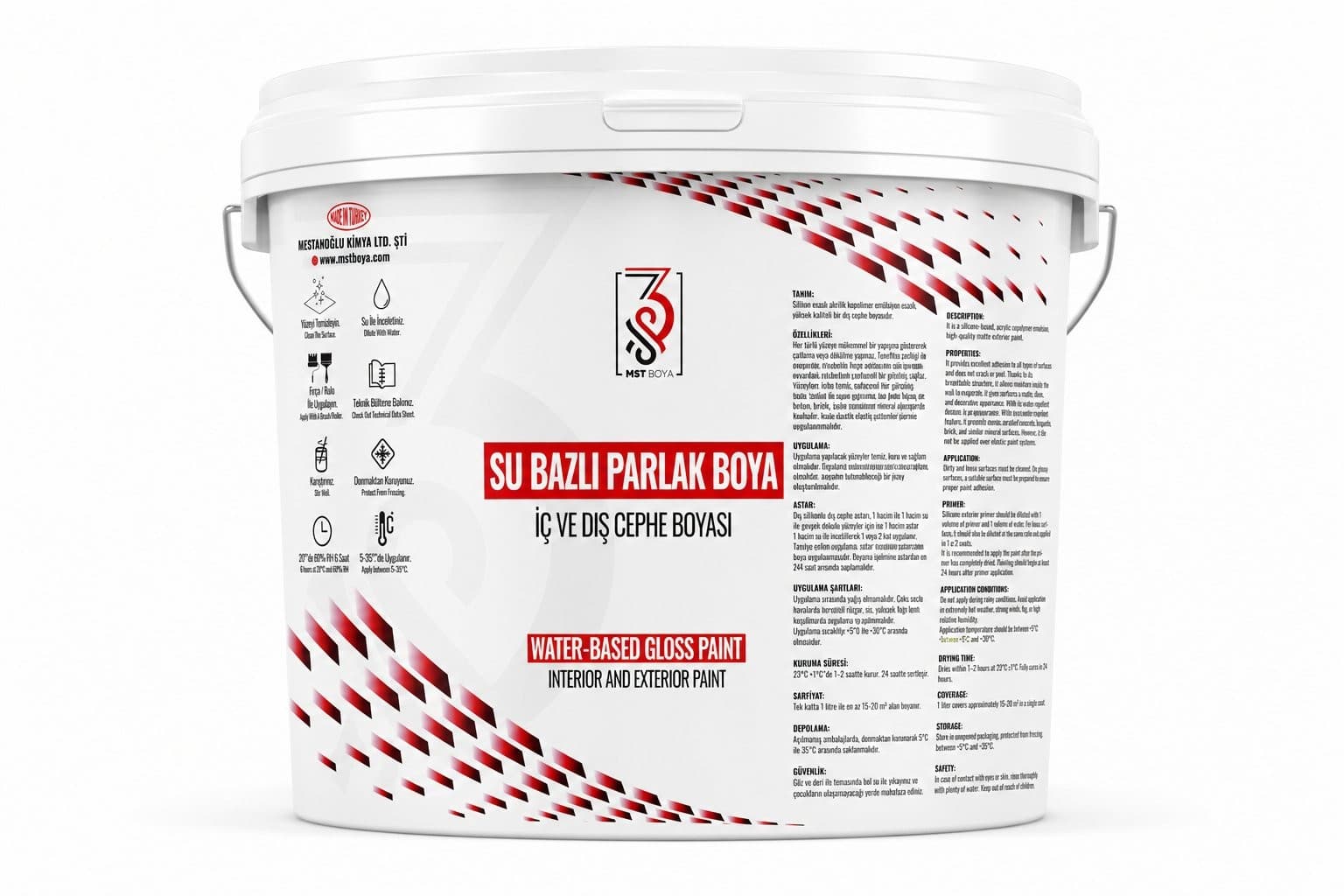
MST Water-Based Gloss Paint is an interior and exterior paint that combines the low odour and easy application of water-based products with the glossy, washable surface expected from solvent-based paint.
For many years anyone who wanted a gloss finish was tied to solvent-based paint; water-based products stopped at the matt and mid-sheen boundary. Advances in acrylic resin technology have removed that distinction. This product dries to a glossy film that reflects light evenly, yet gives off no solvent odour during application and cleans off equipment with water alone.
The practical value of a gloss surface is not appearance but cleanability. A smooth, near non-porous film holds dirt on the surface instead of absorbing it; fingerprints, food marks and general soiling wipe off with a damp cloth. That is a maintenance advantage matt paints cannot offer, and it suits the product to corridors, stairwells, kitchens, children's rooms and heavily used common areas.
The second advantage of being water-based is turnaround. A space painted with solvent-based paint takes a long time to air out; with low odour, this product allows a room to be returned to use far sooner. In schools, hospitals, hotels and offices, where operations cannot stop, that is a decisive difference.
Its breathable structure means it does not trap moisture in plaster and concrete, largely removing the blistering risk seen with solvent-based gloss paints.
Typical applications include interior walls, corridors and stairwells, kitchen and bathroom walls, exterior rendered surfaces, school and hospital corridors, and office and retail interiors.
The most overlooked rule of a gloss finish is this: the higher the gloss, the more visible surface defects become. Small hollows, scratches and filler marks that matt paint conceals stand out on a gloss surface. Preparation therefore has to be more thorough than for matt paint.
The surface must be clean, dry and sound. Remove all dust, dirt and grease; clean grease deposits from kitchen walls with a suitable cleaner. Scrape off blistered and flaking old paint and feather the edges. Fill cracks and holes, sand, and remove dust afterwards.
Where the product goes over glossy old paint, the surface must be abraded to dull it; a glossy, non-porous surface is a poor foundation for a new coat to grip.
New render, plaster and highly absorbent surfaces must be primed. The primer evens out absorption, which matters especially with gloss paint because uneven absorption shows as a difference in sheen — and that difference cannot be corrected once dry.
Apply by brush, roller or spray. Because texture consistency is critical on a gloss surface, use a single method across one surface and do not change roller type during the job.
The first coat may be thinned with a little water according to absorbency. Avoid over-thinning; excess water reduces both opacity and gloss.
Keep a wet edge and finish a wall without interruption. Returning to a half-dried area creates a difference in sheen at the lap, and that mark is far more visible on gloss than on matt. Finish work at corners and natural break points.
Two coats over primer are usual. Allow the surface to dry between coats; a second coat applied too early lifts the film underneath and leaves marks.
Being water-based, drying depends on humidity and air movement. In very warm, dry conditions keeping a wet edge becomes difficult, and excessive draught has the same effect. At low temperatures film formation does not complete, so avoid application in cool weather. Clean equipment with water.
The information below describes the general behaviour of water-based gloss interior/exterior paints. For measured values specific to the product, refer to the technical data sheet (TDS).
| Property | General information |
|---|---|
| Product type | Water-based gloss paint |
| Binder type | Acrylic based |
| Appearance | Gloss |
| Use | Interior and exterior |
| Key properties | Washability, low odour, breathability |
| Application methods | Brush, roller, spray |
| Recommended coats | 2 coats over primer |
| Thinner | Water |
| Cleaning | Water |
Solvent-based gloss paints give a harder film and bond more strongly to bare metal. In return they give off strong odour during application, the space takes a long time to air out, equipment cleaning requires thinner, and their non-porous structure can trap moisture on plastered surfaces.
On wall surfaces, water-based gloss carries none of those drawbacks: odour is low, the space is usable quickly, cleaning is done with water, and the breathable structure prevents moisture entrapment. On metal and timber joinery, however, solvent-based systems remain more suitable.
Do not use alone on bare metal; those surfaces require an anti-rust primer and an appropriate topcoat system. Surfaces under permanent water immersion and industrial floors are outside its scope. Do not apply over fresh concrete or render that has not fully cured. Because gloss accentuates surface defects, matt or mid-sheen products may be more suitable on inadequately prepared surfaces.
Store in the closed original container in a cool, dry place. Being water-based, protect from frost; do not use product that has frozen.